DEFCON AI
1+ Year
brand strategy • visual design • product branding • design system development • ux/ui design • adobe creative suite • figma
TIMELINE
1+ Year
MY ROLE
Director of Product (Founding Designer)
COMPANY
DEFCON AI
Before
Context
DEFCON AI is a defense technology company building next-generation tools for contested logistics, the complex challenge of planning military movement and resupply in environments where traditional methods break down. When I joined, the company had strong mathematical expertise and an early one-page demo proving that advanced modeling could transform planning, but there was no real product yet. The prototype felt like a Windows 95 program, not a modern decision-making tool; there was no clear user experience, and the brand signal came across as chaotic and difficult to use, rather than trustworthy, modern, and mission-aligned.
The team faced significant barriers: limited access to real end users due to classification, rapidly shifting customer requirements, and an aggressive five-month timeline to deliver a 0→1 product that would justify a significant contract. There was no design system, no established product process, and no foundation for scaling. In short, DEFCON needed to transform a brilliant mathematical concept into a reliable, intuitive, field-ready product, at startup speed, in a domain where clarity and correctness are literally mission-critical.
What I Did
The Work
Joined as the founding designer with no prior design team, no established process, and no existing infrastructure. Built the entire design practice from scratch.
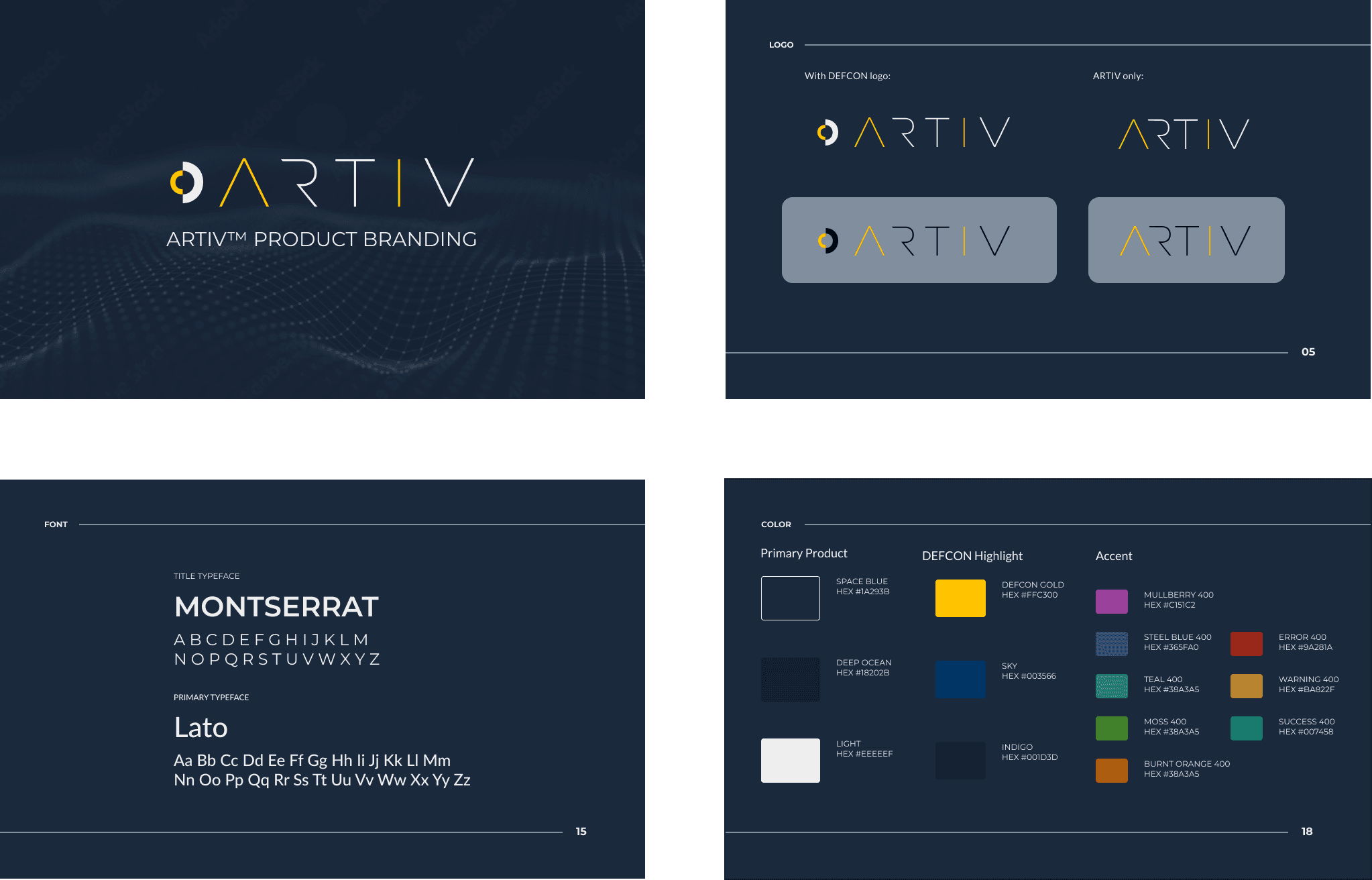
Designed DEFCON’s company brand and ARTIV product identity from zero: wordmark, color system, type scale, iconography, and the visual language that would make a technically complex logistics platform feel credible to military operators rather than like internal prototype software.
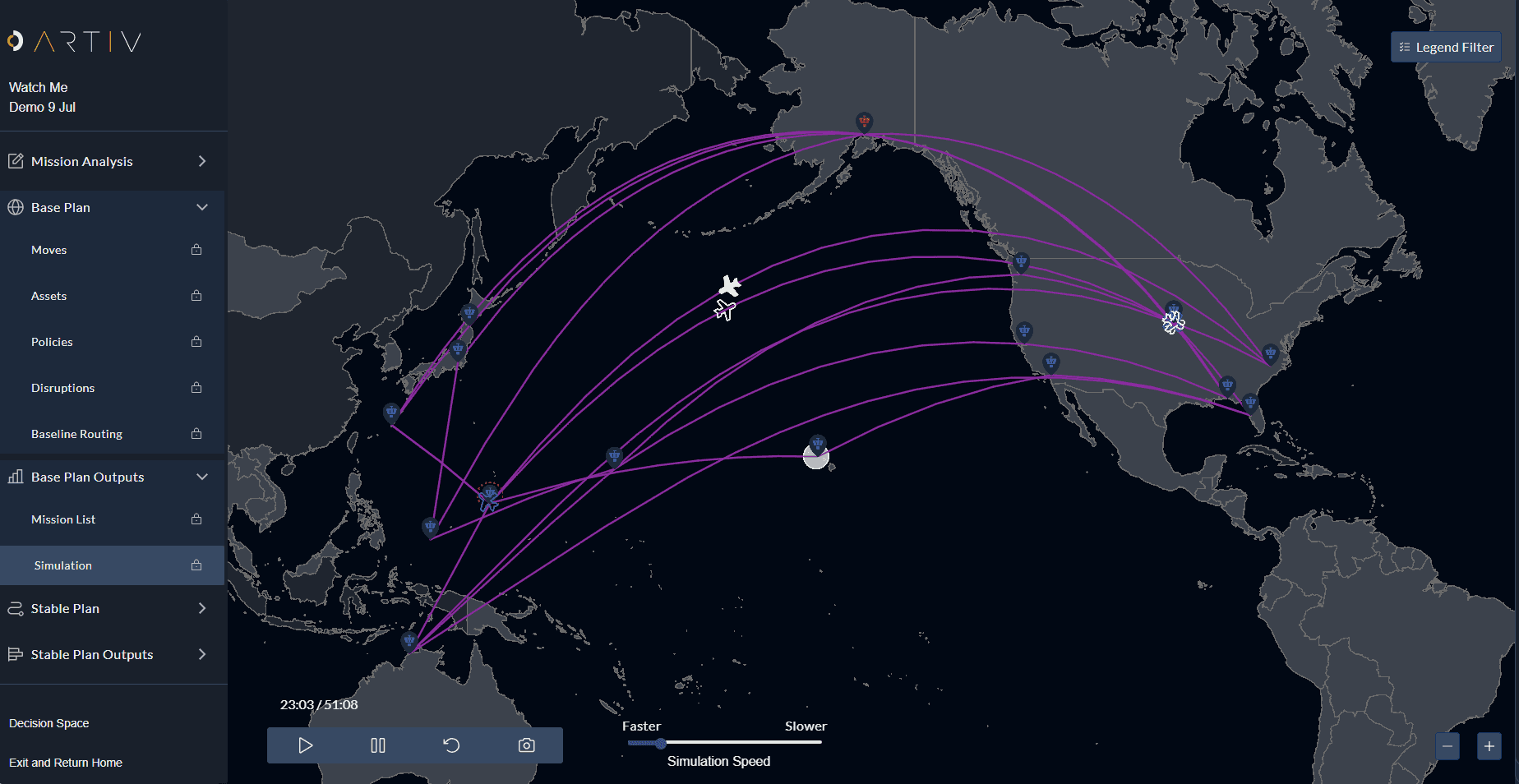
Designed the ARTIV product UI across situational awareness interfaces, logistics planning workflows, course-of-action comparison views, and the data-heavy dashboards operators would use in the field. Worked directly with internal SMEs and iterated against shifting specs and classification constraints that prevented standard user testing.
Built DEFCON’s first design system and component library, establishing shared patterns and documentation across a fast-moving engineering team with no prior design infrastructure.
Owned all external-facing design: pitch decks, partner presentations, and the visual artifacts used in contract negotiations with SOCOM and other government partners.
In the final 8 months, grew the design team from 1 to 3 by hiring and onboarding two additional designers.
Impact
Impact.
Results & Outcomes
DEFCON AI raised $40M following the v1 platform launch. And has gone on to secure other opportunities. Due to the nature of this work this case study is somewhat shorter than the others, but I encourage you to check out the video below posted by DEFCON’s partners showing the platform in full.

See It In Action